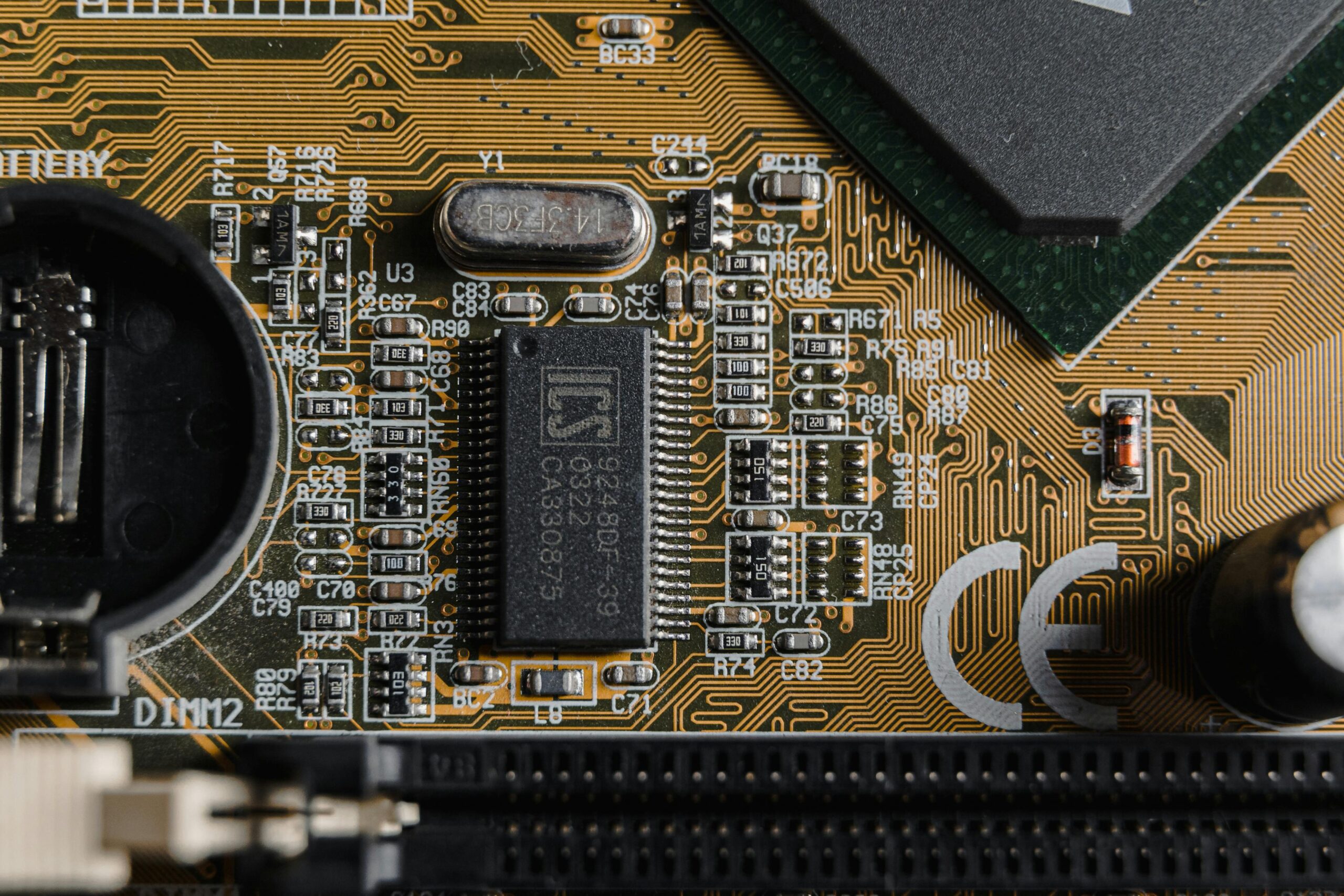

Mobile SoCs in 2025 combine raw CPU/GPU power with on-device AI and efficiency. The latest flagship chips – from Apple’s A-series to Qualcomm’s Snapdragon and MediaTek’s Dimensity – deliver multi-billion AnTuTu scores and advanced neural engines. Mid-range platforms now borrow high-end cores (e.g. ARM Cortex-X4) and feature dedicated AI accelerators. Even budget chips are shifting to 4nm nodes for better performance. Below we rank the top ten processors across all tiers, summarizing their key specs, performance, AI capabilities, and example phones.
1. Apple A18 Pro (Flagship)
The Apple iPhone 16 Pro and Pro Max (2024) launched with the new A18 Pro chip Apple’s A18 Pro is the cutting-edge SoC for the iPhone 16 Pro series. Built on TSMC’s second-generation 3 nm process, it features a 6-core CPU (2× high-performance 4.04 GHz “Everest” + 4× 2.42 GHz efficiency cores). Its GPU is a 6-core Apple-designed unit with hardware-accelerated ray tracing and mesh shading. The chip includes a 16-core Neural Engine (~35 TOPS) for ML tasks. Apple claims the A18 Pro delivers up to 15% faster CPU performance than the A17 Pro while using ~20% less power. In practice it yields ~1.8+ million AnTuTu points. The result is best-in-class efficiency and sustained performance. Example devices: iPhone 16 Pro and Pro Max (2024).
- CPU: 6-core (2×4.04 GHz + 4×2.42 GHz, ARMv9.2-A)
- GPU: 6-core Apple GPU (with ray tracing)
- NPU: 16-core Apple Neural Engine (~35 TOPS)
- Process: TSMC 2nd-gen 3 nm (N3E)
- Performance: Up to 15% faster CPU vs A17 Pro; significantly improved GPU (20% faster than A17 Pro)
- Used in: iPhone 16 Pro / Pro Max
2. Qualcomm Snapdragon 8 Elite (Gen 4, Flagship)
Announced Oct 2024, the Snapdragon 8 Elite (Gen 4) is Qualcomm’s current Android flagship (expected in 2025 phones). It uses TSMC 3 nm (3LPP) and an all-new CPU design: 8 cores (2× custom “Oryon” @4.32 GHz + 6× Oryon @3.53 GHz). The GPU is Adreno 830, clocked up to 1100 MHz (3× pipelines, 1536 shaders), delivering ~3379 GFLOPS of compute. In benchmarks it scores about 2.74 million on AnTuTu 10. Its AI engine is Qualcomm’s Hexagon NPU (with multi-TOPS AI). Efficiency is high (sustained TDP ≈8.2 W). This chip powers the likes of the Xiaomi 15 Ultra, Asus ROG Phone 9, and is expected in Samsung’s Galaxy S25 Ultra.
- CPU: 8-core (2×4.32 GHz + 6×3.53 GHz, Oryon cores)
- GPU: Adreno 830 (1100 MHz, 3 pipelines, 1536 shaders)
- Process: TSMC 3 nm (3LPP)
- Performance: ~99/100 (NanoReview CPU/GPU score); ~2.74M AnTuTu
- AI: Hexagon NPU (Qualcomm AI Engine)
- Used in: Xiaomi 15 Ultra, Asus ROG Phone 9, Realme GT Neo 7 Pro, (upcoming Galaxy S25 series)
3. Qualcomm Snapdragon 8 Gen 3 (Flagship)
The Snapdragon 8 Gen 3 (Oct 2023) remains a top-tier SoC in early 2025. It’s built on TSMC 4 nm, with a 8-core CPU (1×3.30 GHz Cortex-X4 + 3×3.15 GHz A720 + 2×2.96 GHz A720 + 2×2.27 GHz A520). The Adreno 750 GPU (up to 1000 MHz, 1536 shaders) provides high graphics throughput. This chipset scores around 2.05 million in AnTuTu (CPU ~436k, GPU ~870k). Its Hexagon NPU supports advanced on-device AI. Overall it’s about 30% faster and 20% more power-efficient than the prior generation. Example phones: Samsung Galaxy S24 series (Snapdragon models), Pixel 8 Pro, OnePlus 12.
- CPU: 8-core (1×3.30 GHz + 3×3.15 GHz + 2×2.96 GHz + 2×2.27 GHz, Cortex-X4/A720/A520)
- GPU: Adreno 750 (903–1000 MHz, 1536 shaders)
- Process: TSMC 4 nm
- Performance: ~2.05M AnTuTu
- AI: Hexagon NPU
- Used in: Galaxy S24+, Galaxy Z Fold6, Pixel 8 Pro, etc.
4. Apple A17 Pro (High-end)
The Apple A17 Pro (Sep 2023) still ranks among top chips. It’s a 6-core 3 nm SoC (2×3.78 GHz “Everest” + 4×2.11 GHz “Sawtooth”). The GPU is Apple’s 6-core (one extra core vs A16) for gaming and graphics. This chip scored about 1.53 million in AnTuTu benchmarks. It includes a 16-core Neural Engine (35 TOPS). In real use it delivers very high single-thread speed and efficiency (NanoReview CPU score 93). Used in: iPhone 15 Pro and Pro Max (2023).
- CPU: 6-core (2×3.78 GHz + 4×2.11 GHz, ARMv9)
- GPU: Apple 6-core GPU
- Process: TSMC 3 nm
- Performance: ~1.53M AnTuTu
- AI: 16-core Neural Engine (35 TOPS)
- Used in: iPhone 15 Pro / Pro Max
5. Google Tensor G4 (Flagship/AI-focused)
Google’s Tensor G4 (Aug 2024) is an 8-core SoC built on Samsung’s 4LPP+ 4 nm process. The CPU is 1×3.10 GHz Cortex-X4 + 3×2.60 GHz A720 + 4×1.92 GHz A520. The GPU is Arm Mali-G715 MP7 (7 cores). Rather than raw speed, G4 emphasizes efficiency and AI: Google’s TPU (AI accelerator) runs models like Gemini Nano (3.5B parameters) at ~45 tokens/sec – far above the 15 tokens/sec of a 10B model on Snapdragon 8 Gen 3. In benchmarks it scores roughly 1.25M AnTuTu. It also has 12 GB RAM (or 16 GB on Pixel 9 Pro) to accelerate AI tasks. Used in: Google Pixel 9 and 9 Pro.
- CPU: 8-core (1×3.10 GHz + 3×2.60 GHz + 4×1.92 GHz)
- GPU: Mali-G715 MP7 (7-core)
- Process: Samsung 4LPP+ 4 nm
- Performance: ~1.26M AnTuTu
- AI: Google TPU (45 tokens/s on Gemini Nano)
- Used in: Google Pixel 9 / 9 Pro
6. MediaTek Dimensity 9400 (Flagship)
MediaTek’s Dimensity 9400 (announced Oct 2024) is a bleeding-edge 3 nm SoC. It uses an All-Big-Core design: 8 cores (1×3.62 GHz Cortex-X925 + 3× Cortex-X4 + 4×2.00 GHz Cortex-A720). Its GPU is the 12-core Immortalis G925 (with hardware ray tracing), offering a ~40% boost in ray-tracing speed over Dimensity 9300. MediaTek claims +35% single-core and +28% multi-core performance vs Dimensity 9300, with ~40% better efficiency (thanks to 3 nm). The 8th-gen NPU supports on-device generative AI (MediaTek’s new “Agentic” AI engine). Though benchmark numbers aren’t public yet, this is expected to exceed 2+ million AnTuTu. Example targets: upcoming Android flagships (rumored Xiaomi 15 Pro, etc.).
- CPU: 8-core (1×3.62 GHz Cortex-X925 + 3× Cortex-X4 + 4×2.00 GHz A720)
- GPU: Arm Immortalis-G925 (12-core, advanced ray tracing)
- Process: TSMC 3 nm (N3B)
- Performance: +35% single-core, +28% multi-core vs Dimensity 9300
- AI: 8th-gen AI NPU (Generative AI engine, LoRA support)
- Notable: ~40% better power efficiency vs prior gen
- Example Devices: (Expected in 2025 flagships, e.g. Chinese OEMs)
7. MediaTek Dimensity 9300 (High-end)
The Dimensity 9300 (Nov 2023) was MediaTek’s first All-Big-Core chipset. It has 8 cores (4×3.25 GHz Cortex-X4 + 4×2.00 GHz Cortex-A720) on a 4 nm process. Its GPU is a 12-core Immortalis G720 with hardware ray tracing. Compared to last-gen it gained +15% single-thread and +40% multi-thread performance, while cutting multi-core power by ~33%. A 7th-gen NPU with a hardware generative AI engine supports on-device learning (LoRA). Performance is flagship-level (~1.9–2.0M AnTuTu predicted). Example phones: upcoming premium devices (possibly Xiaomi 14 series, Vivo X90 Pro variants, etc.).
- CPU: 8-core (4×3.25 GHz Cortex-X4 + 4×2.00 GHz A720)
- GPU: Arm Immortalis-G720 (12-core, hardware ray tracing)
- Process: TSMC 4 nm (3rd-gen)
- Performance: +15% single-core, +40% multi-core vs Dimensity 8200
- AI: 7th-gen AI NPU (7B parameters, generative AI features)
- Efficiency: ~33% power savings (multi-core) vs previous gen
- Example Devices: Xiaomi 13 series (China), Vivo X100, Vivo iQOO Neo7 Pro, etc.
8. Samsung Exynos 2400 (High-end)
Samsung’s Exynos 2400 (Jan 2024) is a 10-core SoC built on Samsung’s 4 nm low-power node. Its CPU is deca-core: 1×3.21 GHz Cortex-X4 + 2×2.90 + 3×2.60 GHz Cortex-A720 + 4×1.95 GHz Cortex-A520. It uses the Xclipse 940 GPU (based on AMD RDNA3), with roughly 6144 shader ALUs. In tests it scores about 1.74 million on AnTuTu. Samsung boasts a ~14.7× leap in AI performance over the prior Exynos 2200, thanks to a new neural accelerator. A Fan-Out WLP package and thermal improvements help it run cool. Used in: Samsung Galaxy S24 (Exynos variant), Galaxy S24+ (Exynos), and Galaxy S24 FE.
- CPU: 10-core (1×3.21 GHz + 2×2.90 GHz + 3×2.60 GHz + 4×1.95 GHz)
- GPU: Samsung Xclipse 940 (RDNA3-based, 6144 SPs)
- Process: Samsung 4 nm (3rd-gen, low-power)
- Performance: ~1.74M AnTuTu
- AI: +14.7× AI throughput vs Exynos 2200
- Used in: Galaxy S24/S24+ (limited regions), Galaxy S24 FE (Oct 2024)
9. Qualcomm Snapdragon 7+ Gen 3 (Upper Mid-range)
The Snapdragon 7+ Gen 3 (Mar 2024) is a high-end mid-range chip on 4 nm. It has 8 cores (1×2.80 GHz Cortex-X4 + 4×2.60 GHz A720 + 3×1.90 GHz A520) The Adreno 732 GPU and Hexagon NPU are scaled-down versions of the flagship units. In benchmarks it scores about 1.41 million on AnTuTu. The chip targets 5G mid-flagships with strong battery life (NanoReview Battery score 91). Example devices: OnePlus Nord 4, Xiaomi Civi 3, Oppo Reno11 Pro.
- CPU: 8-core (1×2.80 GHz Cortex-X4 + 4×2.60 GHz A720 + 3×1.90 GHz A520)
- GPU: Adreno 732
- Process: TSMC 4 nm
- Performance: ~1.41M AnTuTu
- AI: Qualcomm Hexagon NPU
- Used in: OnePlus Nord 4, Vivo V30 Pro, Realme GT Neo 6, Xiaomi Civi 3
10. Qualcomm Snapdragon 6 Gen 3 (Mid-range/Budget)
The Snapdragon 6 Gen 3 (late 2024) is a budget-oriented 8-core SoC on 4 nm. It uses 4×Cortex-A78 @2.40 GHz + 4×Cortex-A55 @1.80 GHz with an Adreno 710 GPU. Performance is modest (e.g. ~4980 in 3DMark SlingShot†). It supports 5G, Wi-Fi 6E, and has a Spectra ISP. This chip appears in entry devices like Samsung’s Galaxy A36 5G, and offers solid day-to-day performance with very low power consumption.
- CPU: 8-core (4×2.40 GHz Cortex-A78 + 4×1.80 GHz Cortex-A55)
- GPU: Adreno 710
- Process: TSMC 4 nm
- Performance: Entry-level (NanoReview Score ~69; ~0.5M AnTuTu)
- AI: Hexagon AI Engine
- Used in: Samsung Galaxy A36 5G, Vivo Y2s, etc.
Conclusion
By 2025, smartphone chipsets blend ultra-fast CPU/GPU engines with dedicated AI hardware. Flagship SoCs (like Apple’s A18 Pro, Qualcomm’s Snapdragon 8 series, and MediaTek’s Dimensity 9400) push above 2–3 million AnTuTu, often using 3 nm nodes and multi-TOPs NPUs for on-device machine learning. High-end mid-tier chips (Snapdragon 7+ Gen 3, Dimensity 9300) borrow big cores from flagships while focusing on power efficiency. Even budget SoCs (Snapdragon 6 Gen 3) now migrate to 4 nm. All feature advanced GPU tech (ray tracing on some) and multi-core NPUs. The table below summarizes these chips’ core counts, clocks, fabrication, GPUs, and devices:
| Processor | CPU (Perf/Eff cores, max MHz) | GPU (type) | Process | Example Devices |
| Apple A18 Pro | 6-core (2×4.04 GHz + 4×2.42 GHz, ARMv9) | Apple 6-core (with ray tracing) | 3 nm (TSMC N3E) | iPhone 16 Pro/Pro Max |
| Qualcomm Snapdragon 8 Elite (Gen 4) | 8-core (2×4.32 GHz + 6×3.53 GHz, custom) | Adreno 830 (1100 MHz, 1536 shaders) | 3 nm (TSMC 3LPP) | Xiaomi 15 Ultra; Galaxy S25 ULTRA (expected) |
| Qualcomm Snapdragon 8 Gen 3 | 8-core (1×3.30 GHz + 3×3.15 + 2×2.96 + 2×2.27 GHz) | Adreno 750 (903–1000 MHz, 1536 shaders) | 4 nm (TSMC) | Galaxy S24+; Pixel 8 Pro |
| Apple A17 Pro | 6-core (2×3.78 GHz + 4×2.11 GHz) | Apple 6-core | 3 nm (TSMC) | iPhone 15 Pro/Pro Max |
| Google Tensor G4 | 8-core (1×3.10 GHz + 3×2.60 + 4×1.92 GHz) | Mali-G715 MP7 (7-core) | 4 nm (Samsung 4LPP+) | Pixel 9 / 9 Pro |
| MediaTek Dimensity 9400 | 8-core (1×3.62 GHz Cortex-X925 + 3×X4 + 4×2.00 GHz) | Immortalis-G925 (12-core, ray tracing) | 3 nm (TSMC N3B) | (Upcoming 2025 Android flagships) |
| MediaTek Dimensity 9300 | 8-core (4×3.25 GHz + 4×2.00 GHz) | Immortalis-G720 (12-core, ray tracing) | 4 nm (TSMC) | Xiaomi 13 (China); Vivo X100 etc. |
| Samsung Exynos 2400 | 10-core (1×3.21 GHz + 2×2.90 + 3×2.60 + 4×1.95 GHz) | Xclipse 940 (RDNA3, ~6144 SPs) | 4 nm (Samsung) | Galaxy S24 (Exynos); S24 FE |
| Qualcomm Snapdragon 7+ Gen 3 | 8-core (1×2.80 GHz + 4×2.60 + 3×1.90 GHz) | Adreno 732 | 4 nm (TSMC) | OnePlus Nord 4; Realme GT Neo 6; Xiaomi Civi 3 |
| Qualcomm Snapdragon 6 Gen 3 | 8-core (4×2.40 GHz + 4×1.80 GHz) | Adreno 710 | 4 nm (TSMC) | Galaxy A36 5G; Vivo Y2s |
Each of these chips illustrates the 2025 mobile SoC trends: multi-cluster CPU designs with large prime cores, GPUs with ray tracing (flagships), and specialized AI units for on-device machine learning. Citations above give detailed specs and official claims for each chipset